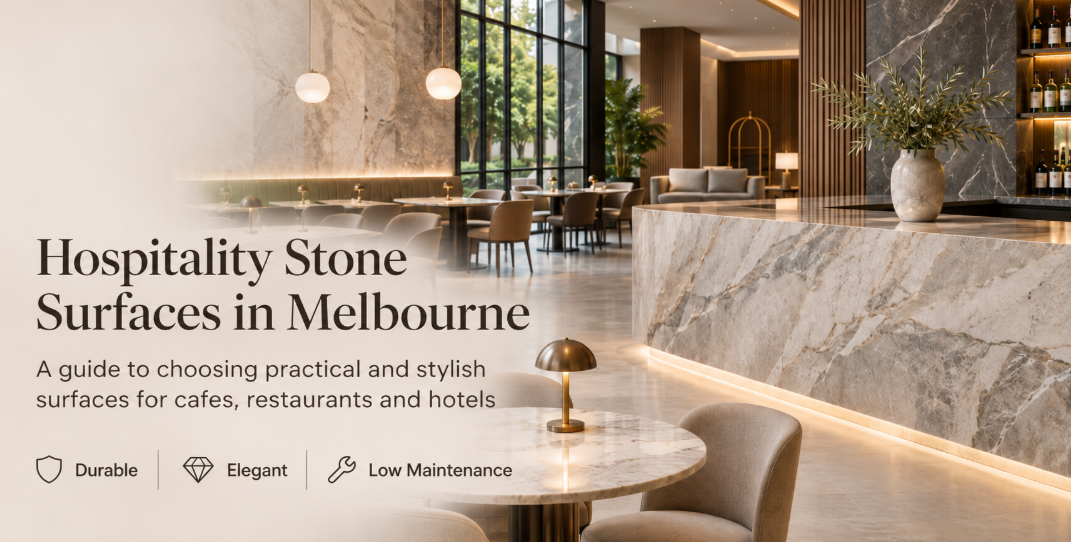
Hospitality Stone Surfaces in Melbourne: Choosing the Right Finish for Your Venue
Walk into a cafe, restaurant or hotel and you will probably notice the interiors before anything else. The bar counter, dining tables, reception desk and bathroom finishes all help create the overall feel of the space. But these surfaces do more than make a venue look good. They also need to handle spills, regular cleaning, heavy use and the occasional knock.
This is why choosing the right stone surface matters so much in hospitality design.
For Melbourne venues, there are several materials worth considering, from natural marble and granite to porcelain and sintered stone. Each has its own appearance, strengths and maintenance needs. In this guide, we look at the available options, where they work best and what to keep in mind before choosing a surface for your project.
Why Are Stone Surfaces a Good Choice for Hospitality Spaces?
Hospitality interiors see a lot of daily activity. A restaurant table might be cleaned several times during a service, while a bar counter deals with drinks, equipment and constant customer contact. Materials need to look good, but they also need to cope with this level of use.
Stone is a popular choice because it brings together a distinctive appearance and practical performance.
Here are a few reasons designers and venue owners consider it:
- Built for everyday use: Granite, quartzite and suitable porcelain surfaces can handle regular contact with glassware, cutlery and other equipment.
- A more refined appearance: Natural patterns, veining and different textures can give a venue a character of its own.
- Easy to maintain: Depending on the material and finish, stone surfaces can be relatively simple to clean and care for.
- A long-term investment: Choosing the right material can reduce the need for frequent repairs or replacement.
- Works across different areas: The same design direction can be carried through bar counters, tables, bathrooms and feature walls.
The important thing is to choose a material according to how the space will actually be used.
Popular Stone Surface Options for Melbourne Hospitality Projects
Not every stone is suitable for every part of a venue. A busy bar counter has different requirements from a hotel reception desk or a decorative restaurant wall.
Let’s look at some of the options commonly considered for hospitality interiors.
| Surface | Suitable applications | Main benefits | Things to consider |
|---|---|---|---|
| Granite | Bar tops, kitchen benches and outdoor areas | Very hard and heat-tolerant | Requires sealing and has a different visual character from marble |
| Marble | Feature bars, reception desks and hotel vanities | Natural veining and a luxurious appearance | Can etch or stain when exposed to wine, citrus and other acidic substances |
| Quartzite | Counters and feature surfaces | Hard, resilient and UV tolerant | Usually requires sealing; confirm the material is genuine quartzite |
| Porcelain | Floors, wall cladding, tabletops and outdoor dining | Low porosity with good stain and heat resistance | Edges and corners need careful detailing |
| Sintered stone | Counters, wall cladding and outdoor kitchens | Good resistance to heat, stains and UV exposure | Check that the product is resin-free and request supplier documentation |
A Note on Engineered Stone Regulations in Victoria
Before selecting a surface, hospitality businesses and designers in Victoria should be aware of the engineered stone restrictions.
Since 1 July 2024, the manufacture, supply, processing and installation of engineered stone benchtops, panels and slabs have been banned in Victoria. Natural stone is not covered by this ban.
Porcelain and sintered stone products are excluded only when they do not contain resin. WorkSafe Victoria has also tested products marketed under these descriptions since the ban came into effect.
If you are planning a commercial fit-out, don’t rely on the product name alone. Ask your supplier for documentation confirming the material’s composition and compliance before making a decision.
Where Can You Use Stone in a Cafe, Restaurant or Hotel?
Stone doesn’t have to be limited to one feature counter. With the right material and finish, it can be used throughout a hospitality space.
Bar counters and fronts
The bar is often one of the busiest parts of a venue. Granite, quartzite and suitable porcelain can be considered for working surfaces, while marble may work well as a decorative feature. The choice depends on the expected use and maintenance requirements.
Restaurant tables and serving counters
Tables need to withstand regular cleaning, food spills and everyday contact. Stone tops can also be made in different shapes and sizes to suit communal tables, booths and individual dining areas.
Hotel reception desks and feature walls
The reception area sets the tone for a hotel. Large-format slabs and textured stone finishes can help create a welcoming space without making the design feel overly busy.
Bathroom vanities and walls
Stone can give hotel bathrooms a clean, polished appearance. For flooring and other wet areas, make sure the selected finish has suitable slip resistance.
Kitchen splashbacks and service areas
These areas need surfaces that are practical to clean and suitable for their working conditions. Heat and stain resistance should be considered when choosing the material.
Entrances and outdoor dining areas
For outdoor applications, check that the surface is suitable for exterior use and can handle the conditions it will be exposed to. Slip resistance is particularly important around entrances and wet areas.
How to Keep Stone Surfaces Looking Good
Even a durable surface needs the right care. In a commercial setting, regular cleaning and proper installation can make a noticeable difference to how well it holds up over time.
A few things worth keeping in mind:
- Choose the right finish: Honed and leathered finishes can help make fingerprints, minor marks and everyday wear less noticeable than high-gloss surfaces.
- Seal natural stone when required: Materials such as marble, granite and quartzite may need sealing to reduce liquid absorption. Follow the fabricator’s recommendations.
- Use suitable cleaning products: A pH-neutral cleaner is generally recommended for natural stone. Avoid acidic or abrasive products that could damage the finish.
- Pay attention to edges and joints: Busy commercial spaces need carefully finished edges and properly planned joins to reduce the risk of chipping and dirt build-up.
- Think about floor safety: Wet areas, entrances and outdoor floors should have an appropriate slip-resistant finish.
- Check local requirements: If the surface is being used in a food preparation or service area, confirm the relevant requirements with your local council’s environmental health team.
These details are easier to plan during the design stage than to fix after the venue has opened.
Stone Design Trends in Melbourne Hospitality Interiors
Hospitality spaces in Melbourne often have a strong design identity. Some venues prefer a warm, relaxed look, while others go for darker colours and dramatic finishes. Stone offers plenty of ways to create these different moods.
A few design directions worth exploring include:
- Bold natural patterns: Marble and quartzite with expressive veining can become the main feature of a bar or reception counter.
- Soft, textured finishes: Honed and leathered surfaces offer a more understated look and can be practical in areas where fingerprints and minor marks are a concern.
- Darker colour palettes: Charcoal, deep grey and black surfaces can work particularly well in cocktail bars, lounges and contemporary restaurants.
- Continuous surfaces: Using the same material across a benchtop and splashback can create a more connected appearance with fewer visible breaks.
- Feature stone walls: Textured or patterned stone panels can add interest to hotel lobbies, dining areas and reception spaces.
The best choice is one that suits the venue’s overall design rather than simply following a trend.
Choosing Hospitality Stone Surfaces with FORMA Living
Selecting a stone surface is not just about finding a colour or pattern you like. It needs to work with the layout, lighting, joinery and overall style of the venue.
At FORMA Living, the focus is on bringing materials and design together to create interiors that feel considered and well put together.
For hospitality projects, this means looking at a few important things:
- Material selection: Finding surfaces that suit the intended use, whether it is a busy bar, restaurant table or hotel bathroom.
- Design consistency: Making sure colours, patterns and finishes work together throughout the space.
- Compliance considerations: Keeping current Victorian requirements in mind when selecting porcelain, sintered stone and other materials.
- Practical performance: Considering cleaning, maintenance and expected wear before finalising the specification.
A little planning at the beginning can help avoid material choices that look good in a sample but are not suitable for everyday commercial use.
If you’re working on a cafe, restaurant, bar or hotel in Melbourne, speak with the FORMA Living team to discuss suitable surface options for your project.
Frequently Asked Questions
Which stone is best for a restaurant or bar in Melbourne?
Granite, quartzite and suitable resin-free porcelain are options worth considering for busy counters and bar tops. Marble can also be used for feature areas, provided you are comfortable with its maintenance requirements.
Is marble suitable for hospitality interiors?
Yes. Marble can look beautiful in restaurants, hotels and bars. However, it can be affected by acidic liquids such as wine and citrus. A suitable finish, sealing and regular care can help maintain its appearance.
Can engineered stone still be used in Victoria?
The manufacture, supply, processing and installation of engineered stone benchtops, panels and slabs have been banned in Victoria since 1 July 2024. Natural stone is not included in the ban. Repairs to stone installed before this date are permitted.
Are porcelain and sintered stone allowed in Victoria?
Yes, provided the products do not contain resin. Always ask the supplier for documentation confirming the product’s composition before specifying it.
How should stone surfaces be cleaned?
Cleaning depends on the material. For natural stone, use suitable pH-neutral products, wipe up spills promptly and avoid acidic or abrasive cleaners. Follow the supplier’s care instructions for the selected surface.
Conclusion
A hospitality space needs surfaces that look good on opening day and continue to perform after months and years of regular use. The right choice depends on where the material will be installed, how busy the venue is and how much maintenance the owner is prepared to manage.
From natural marble and granite to porcelain and sintered stone, there are several options for creating attractive and practical hospitality interiors in Melbourne. Taking time to compare materials, finishes and compliance requirements can help you make a more informed decision.
Planning a hospitality project? Get in touch with FORMA Living to explore stone surfaces that suit your venue’s design, everyday needs and budget.
Related Blogs
Luxury Kitchen Benchtops in Melbourne: A Complete Guide to Choosing the Perfect Surface
The kitchen is often the busiest part of a Melbourne home. It is where the first coffee of the morning is made, where
Read More