Luxury Kitchen Benchtops in Melbourne: A Complete Guide to Choosing the Perfect Surface
The kitchen is often the busiest part of a Melbourne home. It is where the first coffee of the morning is made, where meals are prepared, and where friends and family naturally end up gathering. Because of that, the benchtop needs to do more than simply look good. It needs to work well every day while still giving the kitchen the finish you want.
If you are renovating or building a new home, choosing between the many luxury kitchen benchtops in Melbourne can feel overwhelming. There are plenty of materials, colours, finishes and design options available, and each one has its own advantages.
So, what actually makes a benchtop feel luxurious? And which material makes the most sense for your home?
Let’s take a closer look.
What Makes a Kitchen Benchtop Luxury?
A higher price does not automatically mean a better benchtop. A genuinely premium surface usually comes down to a combination of material, workmanship, design and how well it holds up over time.
Material quality
The material sets the foundation. Natural stone, quality porcelain and other premium surfaces can give a kitchen a refined finish while offering different levels of durability, maintenance and performance.
Good workmanship
Even an expensive slab can look disappointing if it has poorly planned joins or uneven edges. Accurate templating, clean cut-outs and careful fabrication make a noticeable difference to the finished kitchen.
Strong visual impact
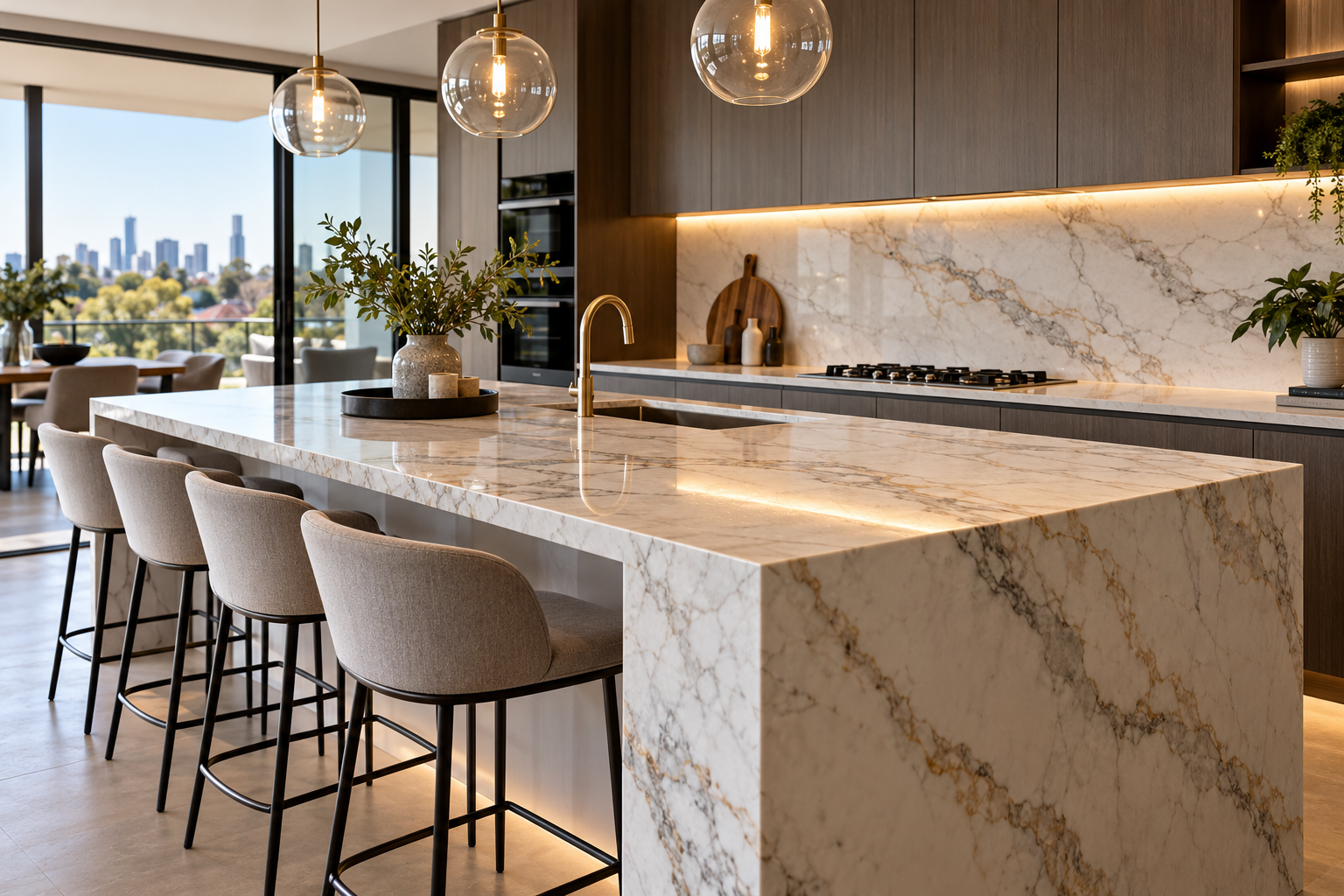
A benchtop is often one of the first things people notice when they walk into a kitchen. Waterfall edges, large islands, book-matched stone and bold veining can turn a practical surface into a major design feature.
Long-term performance
A luxury benchtop should also suit everyday life. The right material should be able to handle the level of cooking, cleaning and general use your kitchen sees without becoming difficult to maintain.
Popular Materials for Luxury Kitchen Benchtops
Melbourne homeowners have plenty of options when it comes to kitchen surfaces. The best choice depends on your style, budget, maintenance expectations and how you actually use your kitchen.
Natural Marble
Marble has remained popular for a reason. Its natural veining gives every slab its own character, and stones such as Calacatta, Carrara and Statuario can create a timeless look.
However, marble does need more care than some other materials. It can react to acidic foods and drinks, including lemon juice and wine, and may require sealing depending on the stone.
For homeowners who love the appearance of marble but want to reduce everyday wear, one option is to use it in an area such as a feature island and choose a more durable surface for high-use preparation areas.
Granite
If durability is high on your list, granite is worth considering. It is a hard natural stone with good resistance to heat and scratching, making it suitable for busy kitchens.
Granite is not limited to traditional designs either. Honed and leathered finishes can give it a much more contemporary appearance, while darker shades such as charcoal, black and deep green can create a dramatic kitchen.
Quartzite
Quartzite is sometimes confused with engineered quartz, but the two are different. Quartzite is a natural stone and is often chosen by homeowners who want the soft, flowing appearance associated with marble but need a harder-wearing surface.
Popular varieties such as Taj Mahal, White Macaubas and Cristallo can have beautiful natural movement and veining.
For many homeowners, quartzite offers a good balance between appearance and everyday performance.
Engineered Stone
Engineered stone is manufactured using crushed quartz, resins and pigments. One of its main advantages is consistency. You can get a wide range of colours and patterns, including designs inspired by natural marble.
It is also generally low maintenance and non-porous.
There is an important point to consider when choosing engineered stone in Australia, however. High-silica engineered stone products have been subject to a national ban since 1 July 2024 due to serious health concerns associated with silica dust during fabrication.
If you are considering engineered stone, ask your supplier exactly what product is being offered and whether it complies with current Australian requirements.
Porcelain and Sintered Stone
Large-format porcelain and sintered surfaces have become increasingly popular in contemporary kitchens.
They can offer high resistance to heat, UV exposure and everyday wear, while their low porosity makes them relatively easy to maintain. Another advantage is the variety of looks available. Porcelain can be made to resemble marble, concrete, timber and other materials.
The large slab formats can also help create a clean, modern appearance with fewer visible joins.
One thing to keep in mind is that porcelain edges can be more vulnerable to chipping if they receive a sharp impact. This is why experienced fabrication and the right edge treatment are important.
Design Details That Can Make a Big Difference
Choosing the material is only one part of the process. The way the benchtop is designed and fabricated can completely change the finished look.
Waterfall edges
A waterfall edge continues the benchtop material down the side of an island. It gives the island a stronger architectural presence and works particularly well in open-plan kitchens.
Mitred and thickened edges
A thicker-looking edge can make a benchtop feel more substantial. Mitred edges are often used to create this appearance while allowing a thinner slab to look much more substantial.
Book-matched slabs
Book matching is all about the natural pattern of the stone. Two slabs are positioned so their veining mirrors across the join, creating a continuous and often dramatic visual effect.
This can work particularly well on large kitchen islands or feature walls.
Integrated sinks and drainers
Undermount sinks and routed drainer grooves help keep the benchtop looking clean and uncluttered. They can also make everyday cleaning easier because there are fewer raised edges and interruptions.
Well-planned joins
Large kitchens may require more than one slab. Where the joins are placed matters. A skilled fabricator can plan the layout around the natural pattern of the material so that joins are less noticeable.
Surface finish
The finish can change the overall feel of a material.
A polished surface reflects more light and gives a sharper, more luxurious appearance. A honed finish is softer and more understated, while a leathered finish adds texture and can be useful for creating a more relaxed look.
Choosing a Benchtop for Melbourne Homes
The style of your home can also influence which benchtop works best.
Heritage and period homes
Melbourne has plenty of Victorian and Edwardian homes where the kitchen needs to work with existing architectural details.
Soft marble, natural stone and warmer tones can sit comfortably alongside original features while still giving the kitchen a modern feel. Homes in suburbs such as Hawthorn, Brighton and Kew can benefit from this balance between old and new.
Contemporary homes
For newer properties and minimalist interiors, large-format porcelain, dark granite and strongly veined natural stone can make a statement without making the room feel busy.
In areas such as South Yarra, Toorak and Docklands, a simple kitchen layout combined with a standout island can create a clean and modern result.
Kitchens designed for entertaining
If you regularly have friends or family over, the kitchen needs to be practical as well as attractive.
A generous island with seating space can become the centre of the room. Durable surfaces, sensible preparation areas and a nearby butler’s pantry can also make entertaining much easier.
Indoor-outdoor spaces
Many Melbourne homes are designed around outdoor entertaining. If your kitchen connects directly with an alfresco area or courtyard, consider materials that can handle the conditions of the space and maintain a consistent visual style.
Questions to Ask Before Choosing Your Benchtop
Before committing to a material, it is worth thinking about how you will actually use the kitchen.
1. How much cooking do I do?
Someone who cooks every day and regularly works with hot pans, oils and acidic ingredients may have different requirements from someone who mainly uses the kitchen for entertaining.
2. How much maintenance am I willing to do?
Some natural stones require more care than others. If you prefer a surface that requires less maintenance, make that part of your decision from the beginning.
3. What is the complete project cost?
The slab itself is only one part of the price. Remember to consider templating, fabrication, installation, cut-outs, edge profiles, thickness and waterfall ends.
4. Can I see the actual slab?
This is particularly important with natural stone. Every slab can look different, so viewing the actual material before fabrication can help you understand exactly what you are getting.
5. Who is fabricating and installing it?
Ask about the fabricator’s experience, installation process, material compliance and warranty. Good workmanship can make a significant difference to the final result.
Why Templating and Installation Matter
A beautiful slab cannot compensate for poor installation.
Kitchen walls are not always perfectly straight or square, particularly in older Melbourne homes. Accurate digital templating helps the fabricator account for these variations before the material is cut.
Experienced fabricators can also work out how to position the slabs, manage joins and make the most of natural veining.
Installation is equally important. Proper support, levelling and finishing help ensure the benchtop performs as expected and continues to look good over time.
Why Choose Forma Living for Luxury Kitchen Benchtops in Melbourne?
Choosing a benchtop is not simply about picking a colour from a sample. You need to think about how the material will work with your cabinetry, flooring, lighting and the way you use the kitchen.
At Forma Living, the aim is to help homeowners, builders and designers make that decision with more confidence.
A good benchtop supplier should be able to provide:
- A considered range of materials including natural stone, porcelain and suitable engineered options
- Practical design advice based on your style, budget and lifestyle
- Careful fabrication with attention to joins, edges and cut-outs
- Clear communication throughout the selection and installation process
- A focus on quality from the initial consultation through to the finished kitchen
Whether you are updating a Melbourne terrace or working on a completely new home, the right surface can make a noticeable difference to the finished space.
How to Look After Your Luxury Benchtop
Once your new benchtop is installed, a little regular care can go a long way.
- Wipe up spills, especially coffee, wine, citrus, oils and other staining liquids.
- Use a suitable pH-neutral cleaner rather than harsh abrasive products.
- Use chopping boards instead of cutting directly on the surface.
- Use trivets when placing very hot cookware on materials where heat protection is recommended.
- Follow the supplier’s advice about sealing natural stone.
- Avoid sitting or standing on the benchtop, particularly around overhangs and sink cut-outs.
The exact care routine will depend on the material, so always follow the manufacturer’s or supplier’s recommendations.
Final Thoughts
Choosing luxury kitchen benchtops in Melbourne is about finding the right balance between appearance, everyday practicality and long-term performance.
Marble can bring timeless character, granite offers durability, quartzite combines natural beauty with strength, while porcelain provides a modern and versatile option. The material is important, but so are the details around it — the edge profile, finish, joins, templating and installation all contribute to the final result.
Most importantly, choose a surface that fits the way you actually live. A beautiful benchtop should not just look impressive on the day your renovation is finished. It should continue to work for you every day.
If you are planning a new kitchen or renovation, Forma Living can help you explore premium benchtop options and find a surface that suits your home, style and everyday needs.
Related Blogs

Choosing a Stone Supplier for Architects in Australia: What Really Matters
Choosing the right stone can make a big difference to how a building looks and feels. Whether it is a kitchen benchtop,
Read More
The Versatility of Natural Stone : From Benchtops to Flooring
In the realm of interior design and architecture, natural stone stands out for its unparalleled versatility, seamlessly
Read More