Italian Porcelain Slabs Melbourne: A Practical Guide to Choosing the Right Surface
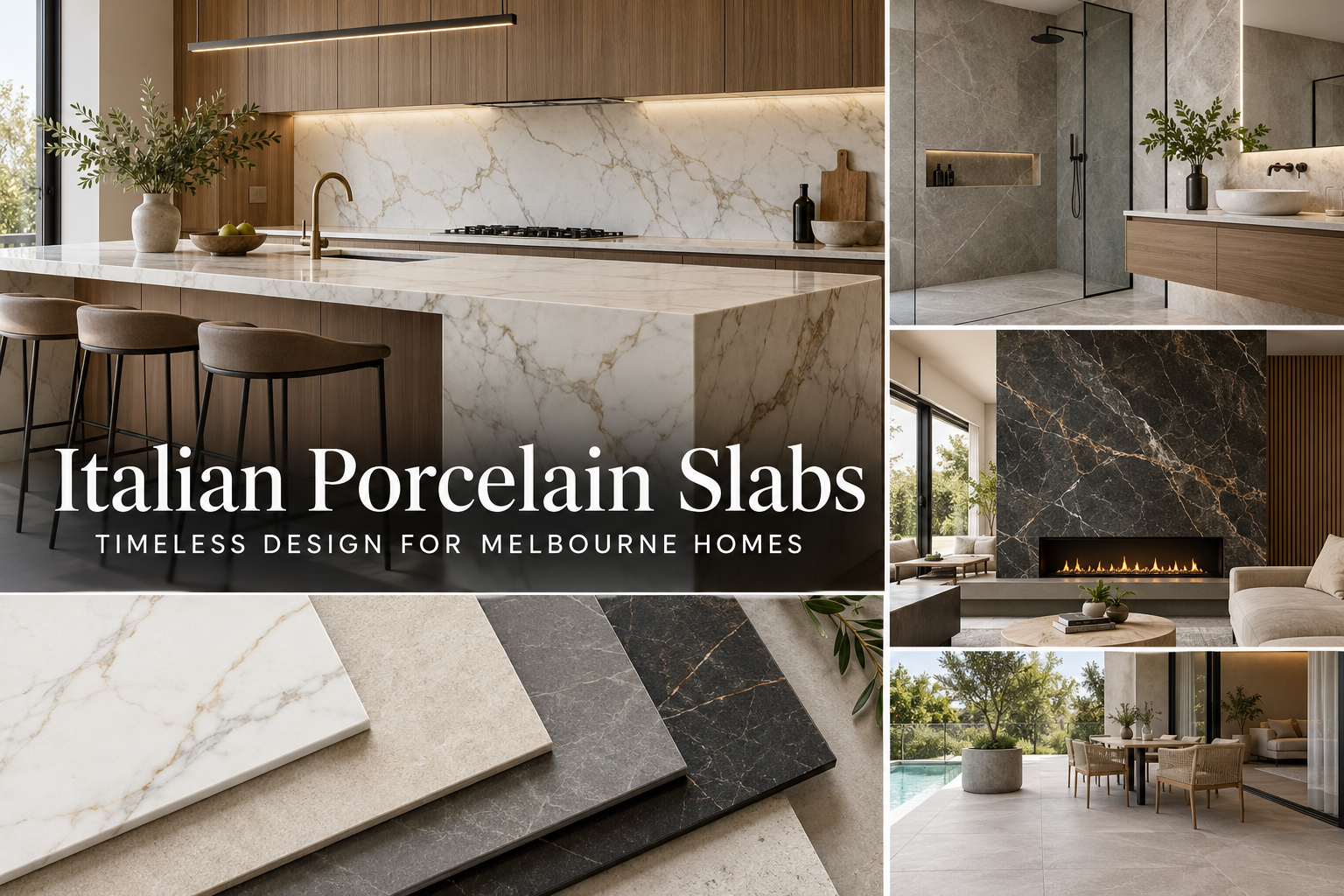
There is something different about the way Italian porcelain looks in a finished Melbourne home. It feels clean and considered, but not cold. The surface can make a kitchen feel more spacious, give a bathroom a more refined finish, or turn a plain wall into a feature without making the room feel over-designed.
That is one reason Italian porcelain slabs have become increasingly popular with Melbourne homeowners, architects, builders and interior designers. They offer the appearance of natural stone while providing the practicality needed for everyday spaces.
At Forma Living, we work with a range of premium surface materials and understand that choosing a slab is not simply about picking the best-looking option. The colour, finish, size, application and overall design of the space all matter.
If you are considering Italian porcelain slabs in Melbourne, here is what you should know before making your decision.
What Are Italian Porcelain Slabs?
Italian porcelain slabs are large-format porcelain surfaces manufactured in Italy using carefully selected natural raw materials and advanced production techniques.
Unlike traditional porcelain tiles, slabs are produced in much larger sizes. This creates a more continuous appearance with fewer joints across walls, floors, benchtops and other surfaces.
Italian manufacturers are also known for producing porcelain that closely recreates the appearance of materials such as marble, limestone, travertine and other natural stones.
The result is a surface that can bring the visual character of natural stone into a modern interior while offering the durability and relatively low maintenance associated with porcelain.
Why Are Italian Porcelain Slabs Popular in Melbourne?
Melbourne homes have a wide variety of architectural styles. You can find everything from compact apartments and renovated Victorian homes to contemporary townhouses and large new builds.
Italian porcelain works well across many of these styles because it is available in a wide range of colours, patterns and finishes.
For homeowners, the attraction often comes down to three things: appearance, practicality and versatility.
A marble-look porcelain slab can create a luxurious kitchen without requiring the same level of maintenance associated with some natural stones. A concrete-look finish can suit an industrial-style renovation, while a soft limestone-inspired surface can work beautifully in a warm, minimal interior.
The large format also helps create a cleaner visual effect, which is particularly useful in contemporary Melbourne interiors.
Large Format Means Fewer Visible Joints
One of the biggest advantages of porcelain slabs is their size.
Traditional tiles require multiple grout lines, which can break up a surface. Large-format slabs reduce the number of visible joints and can make an area feel more continuous.
This is especially effective on kitchen splashbacks and bathroom walls.
Imagine a marble-inspired kitchen splashback running from the benchtop to the overhead cabinetry. Instead of several small tiles and multiple grout lines, the veining can flow across one large surface.
The same principle works in bathrooms. A large porcelain slab can create a wall-to-floor visual connection that makes the room feel larger and more cohesive.
Of course, the exact slab size available will depend on the collection and manufacturer, as well as transportation and installation requirements.
Italian Porcelain vs Natural Stone
Natural stone has always been valued for its individuality. Every piece of marble, granite, limestone or quartzite has its own natural variations.
Italian porcelain can offer a different approach.
Modern manufacturing technology allows porcelain surfaces to reproduce the visual characteristics of natural stone with impressive detail. You can achieve the look of marble or stone while choosing a surface designed for everyday practicality.
This does not mean porcelain should replace natural stone in every project. Natural stone has a genuine character that cannot be completely replicated.
The right choice depends on the project.
If you love natural variation and want an entirely natural material, stone may be the better option. If you want a consistent design, lower maintenance and a particular stone-inspired appearance, Italian porcelain may be worth considering.
Where Can You Use Italian Porcelain Slabs?
The versatility of porcelain is another reason it works so well in residential and commercial interiors.
Kitchen Benchtops
Kitchen benchtops need to deal with everyday use, spills, cooking and regular cleaning.
Italian porcelain can provide a sophisticated surface while fitting into both modern and traditional kitchen designs.
Marble-look porcelain is particularly popular for kitchens where homeowners want a premium appearance. Neutral colours can create a timeless look, while darker slabs can add contrast to light cabinetry.
Before choosing a slab for a benchtop, however, it is important to discuss the application with your fabricator. Edge details, thickness, joins, cut-outs and installation requirements all need to be considered.
Kitchen Splashbacks
A porcelain slab can make an excellent kitchen splashback.
Instead of using small tiles, you can create a continuous surface that complements the benchtop and cabinetry.
This is also an opportunity to use a more dramatic pattern. A subtle kitchen design can be given more personality through a slab with stronger veining or texture.
Bathroom Walls
Bathrooms are another natural application for large-format porcelain.
Fewer joints mean less grout across the wall, creating a cleaner appearance. Depending on the chosen finish, porcelain can replicate marble, limestone, concrete and other materials.
A large slab behind a vanity or across a shower wall can become a feature without requiring additional decorative elements.
Feature Walls
Italian porcelain is not limited to kitchens and bathrooms.
Large slabs can also be used on feature walls in living rooms, entryways, fireplaces and commercial spaces.
A stone-inspired surface can add texture and visual interest without overwhelming the room.
Outdoor Areas
Some porcelain products are designed for suitable outdoor applications. However, not every slab is appropriate for external use.
If you are considering porcelain for a balcony, alfresco area, pool surrounds or another outdoor space, always check the manufacturer’s specifications and installation requirements first.
Choosing the Right Colour and Pattern
Choosing a porcelain slab can be harder than it looks because there are so many options.
A good starting point is the overall style of your home.
For a timeless Melbourne interior, soft whites, creams, warm greys and natural stone-inspired patterns can work well. If the space has darker cabinetry or furniture, a lighter slab can provide balance.
If you want something more dramatic, consider stronger veining or deeper tones.
However, it is important to look at a physical sample whenever possible. Images on a screen can make colours and patterns appear different from how they look in natural or indoor lighting.
The size of the room matters too. A highly patterned slab can become the main feature of a small space, while a more subtle design may work better when you want the room to feel calm and understated.
Matte or Polished Finish?
The finish can change the entire appearance of a slab.
A polished surface reflects more light and can give a kitchen or bathroom a bright, refined appearance. It can work particularly well in spaces where you want a sleek and luxurious feel.
A matte finish is softer and more understated. It can suit contemporary, minimalist and natural interiors where you want to avoid excessive shine.
There is no universally better option. Think about how you want the room to feel and how the surface will interact with your cabinetry, flooring and lighting.
Maintenance and Everyday Cleaning
One of the reasons porcelain is attractive for busy households is that it is generally straightforward to maintain.
Regular cleaning normally involves removing everyday dirt and spills using appropriate cleaning products recommended for the specific surface.
However, good maintenance starts with proper installation. Incorrect cleaning products, unsuitable chemicals or poor installation practices can affect the appearance of any surface.
It is always best to follow the care instructions supplied by the manufacturer and fabricator.
What Should You Consider Before Buying?
Choosing a slab should not be based on appearance alone.
Before ordering Italian porcelain slabs in Melbourne, consider:
- Where the slab will be installed
- The required slab size
- Thickness and edge requirements
- Veining and pattern direction
- Available finishes
- Cabinet and flooring colours
- Natural and artificial lighting
- Fabrication requirements
- Installation conditions
- Cleaning and maintenance requirements
- Availability and lead times
These details can make a significant difference to the final result.
For example, if you choose a marble-look slab with prominent veining, the direction in which the slab is cut and installed can affect how the pattern appears across the finished surface.
Discussing these details with your designer, supplier and fabricator before ordering can help avoid costly surprises later.
Why Work With a Specialist Surface Supplier?
Buying a slab is only one part of the process.
You also need to understand whether the material is suitable for your intended application, how it should be fabricated and how it will work with the rest of the design.
A specialist supplier can help you compare different surfaces, finishes and patterns based on your project rather than simply recommending the most popular option.
At Forma Living, our focus is on helping homeowners, designers, architects and builders find surfaces that suit both the visual direction and practical requirements of a project.
Seeing the material in person is also valuable. A slab that looks perfect online may appear completely different when viewed alongside your cabinetry, flooring or natural light.
Italian Porcelain Slabs for Melbourne Homes
Melbourne’s design culture is always changing, but the demand for surfaces that combine good design with everyday practicality continues to grow.
Italian porcelain slabs fit naturally into this approach. They can create a sophisticated appearance without making a space feel overly complicated.
Whether you are planning a new kitchen, renovating a bathroom, designing a feature wall or working on a larger architectural project, there are plenty of porcelain options to explore.
The key is to choose a slab that works with the entire space rather than selecting a surface in isolation.
Think about colour, texture, lighting, scale and how the material will be used every day.
Final Thoughts
Italian porcelain slabs offer Melbourne homeowners and designers an attractive combination of style, versatility and practicality. With large formats, realistic stone-inspired designs and a wide selection of finishes, they can work across everything from kitchen splashbacks to bathroom walls and feature areas.
But the best slab is not necessarily the most expensive or dramatic one. It is the one that fits the space, suits the way you live and works with the rest of the design.
If you are exploring Italian porcelain slabs in Melbourne, take time to compare samples, finishes and applications before making your final choice. A well-selected surface can become one of the defining elements of an interior and continue to look relevant for years to come.
Related Blogs
Porcelain Slabs Melbourne: Large Format Architectural Surfaces | Forma Living
Walk into a modern Melbourne home and you may notice something different about the way its surfaces are designed.
Read More
Premium Stone Supplier in Melbourne: How to Choose the Right Stone for Your Home
The right stone can completely change the look and feel of a home. Think of a marble kitchen island with beautiful
Read More