Porcelain Slabs Melbourne: Large Format Architectural Surfaces | Forma Living
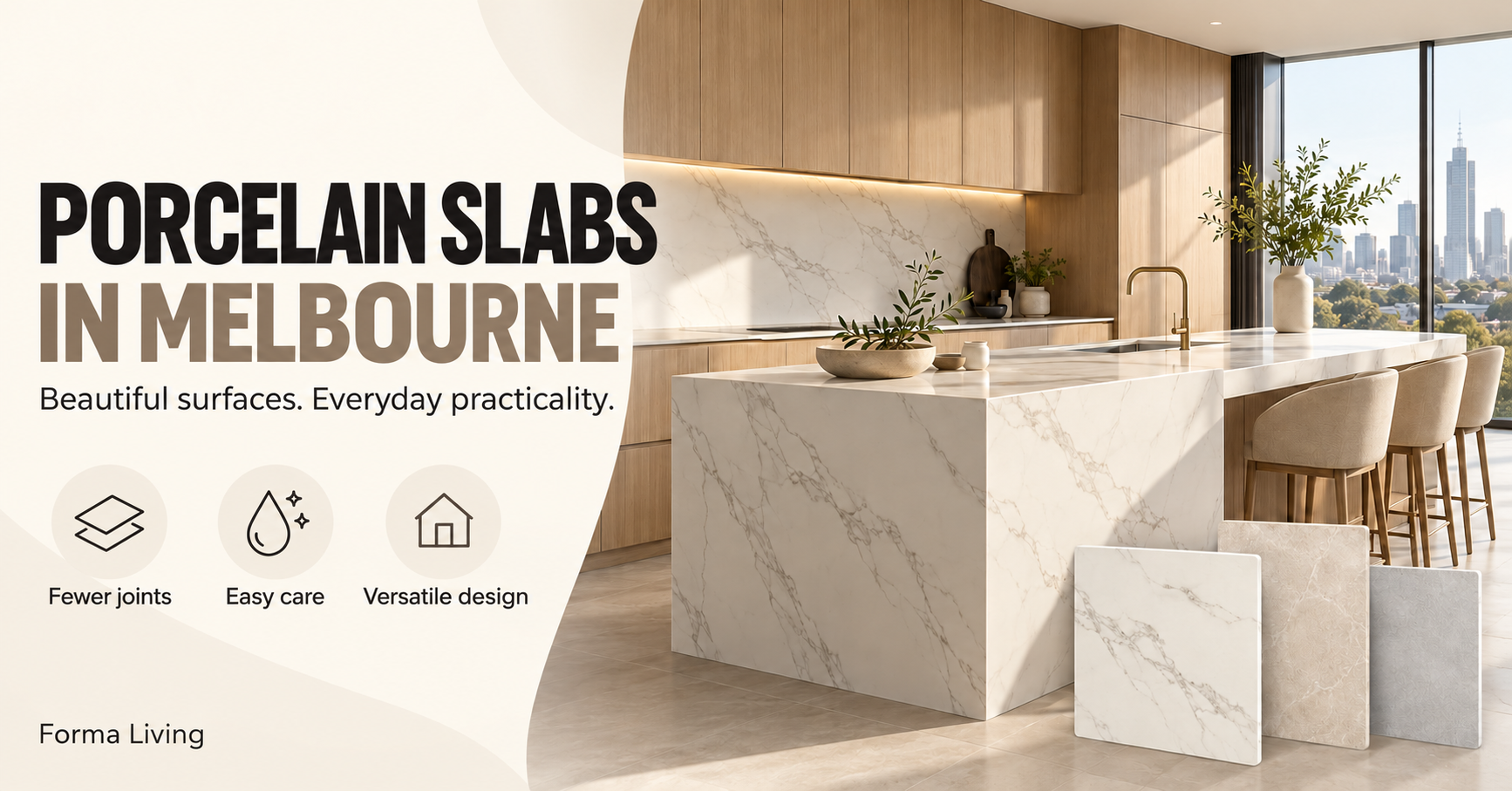
Walk into a modern Melbourne home and you may notice something different about the way its surfaces are designed. Kitchen benchtops flow into splashbacks, bathroom walls have fewer visible joints, and large feature walls create a clean, uninterrupted look. One material helping achieve this style is porcelain.
From renovated Victorian homes in Brighton to contemporary apartments in Fitzroy, porcelain slabs are becoming a popular choice for homeowners, architects and interior designers.
At Forma Living, we understand that choosing the right surface is about more than appearance. It also needs to suit your lifestyle, fit your space and stand up to everyday use. If you are exploring porcelain slabs in Melbourne, this guide covers their benefits, common applications and what to consider before making your choice.
What Are Porcelain Slabs?
Porcelain slabs are large sheets of porcelain made from a blend of natural minerals, including refined clay, feldspar and silica. These materials are pressed under high pressure and fired at very high temperatures to create a dense, durable surface.
Depending on the manufacturer, slabs are available in different sizes and thicknesses. Some are designed for wall cladding, while thicker options are suitable for benchtops and other demanding applications.
One reason porcelain has become so popular is the variety of designs available. Modern manufacturing techniques can recreate the look of marble, limestone, travertine, concrete and other natural materials. Some designs feature detailed veining that gives a space the character of natural stone without requiring the same level of maintenance.
Unlike conventional tiles, large format porcelain surfaces can cover a much bigger area with fewer joints. This creates a more continuous finish, which works particularly well in contemporary interiors.
Why Are Large Format Porcelain Surfaces Popular in Melbourne?
Melbourne has a diverse architectural style. You will find everything from traditional period homes to industrial conversions and newly built contemporary properties. Large format porcelain suits many of these spaces because it combines a clean appearance with practical performance.
A Practical Choice for Melbourne’s Climate
Melbourne’s weather can change quickly, so materials used outdoors need to handle varying conditions.
Suitable porcelain products can offer resistance to moisture, frost and UV exposure. This makes them worth considering for outdoor kitchens, alfresco areas, exterior walls and other applications, provided the product is specifically rated for the intended use.
For outdoor flooring, it is also important to choose a suitable thickness and slip-resistant finish.
Easy to Maintain
Kitchens, bathrooms and living areas experience plenty of daily wear. Spills, splashes and regular cleaning can quickly become a concern when the wrong material is chosen.
Porcelain is generally non-porous, so it resists many common stains and does not require routine sealing like many natural stones. For busy households, this can make everyday maintenance much simpler.
A Clean, Modern Finish
Large format surfaces can make a room feel more connected because there are fewer grout lines interrupting the design.
Whether you prefer neutral colours, marble-inspired patterns or a concrete finish, porcelain gives you plenty of options. It can create a subtle background for your furniture or become the main feature of the room.
Where Can You Use Porcelain Slabs?
One of the biggest advantages of porcelain is its versatility. The same material category can be used in several areas of a residential or commercial project.
Kitchen Benchtops and Splashbacks
The kitchen is one of the most common places to use porcelain slabs.
Their resistance to many stains, heat and everyday wear makes them a practical option for busy kitchens. However, direct heat exposure and impact should still be managed according to the manufacturer’s recommendations.
Using the same porcelain design for a benchtop and splashback can create a coordinated finish. Marble-look designs are particularly popular for homeowners who want an elegant appearance without the maintenance associated with some natural stones.
Bathrooms and Wet Areas
Porcelain is also well suited to bathroom walls, shower areas and vanity surfaces when the correct product and installation method are selected.
Large slabs mean fewer grout joints, which can make cleaning easier and give the bathroom a more spacious appearance. A carefully selected stone-inspired finish can also create a relaxing, spa-like atmosphere.
For bathroom flooring, check the slip resistance of the specific product rather than choosing on appearance alone.
Feature Walls and Fireplaces
A feature wall can change the feel of a room without requiring a complete redesign.
Large format porcelain is often used behind televisions, around fireplaces and in entrance areas. Marble-inspired patterns can add visual interest, while concrete and limestone looks work well in understated interiors.
Before using porcelain around a fireplace, confirm that the selected product and installation system are suitable for the required temperatures and application.
Flooring
Large format porcelain flooring can help create a consistent look throughout open-plan living spaces.
Because there are fewer grout lines, the floor can appear less busy and connect different areas of the home. Porcelain is also compatible with many underfloor heating systems when installed according to the relevant specifications.
The right finish matters here, particularly in bathrooms, kitchens and entrances where floors may become wet.
Outdoor Living Areas
Outdoor kitchens, courtyards and alfresco dining areas can benefit from porcelain surfaces designed specifically for exterior use.
These products can offer good resistance to moisture, sunlight and everyday wear. If you are choosing porcelain for a poolside area or outdoor paving, make sure the surface has the appropriate slip rating and is suitable for local conditions.
Commercial Spaces
Porcelain slabs are not limited to residential projects. They are also used in restaurants, hotels, offices, retail stores and reception areas.
Their range of finishes makes it possible to create anything from a polished, premium interior to a more understated commercial space. Durability and straightforward maintenance are additional benefits in areas that receive regular foot traffic.
Porcelain Slabs vs Natural Stone vs Engineered Stone
Choosing a surface often comes down to comparing appearance, maintenance, durability and budget.
Porcelain slabs: These offer a wide choice of designs, low porosity and generally straightforward maintenance. Suitable products can be used indoors and outdoors, depending on their specifications.
Natural stone: Marble, granite and limestone each have their own natural patterns and character. However, maintenance requirements vary by stone. Some are more susceptible to staining, scratching or etching and may need periodic sealing.
Engineered stone: This category includes different products with different compositions and performance characteristics. Some surfaces are suitable for particular indoor applications but may have limitations relating to heat, UV exposure or current Australian regulations. Always check the manufacturer’s guidance and applicable requirements before choosing a product.
There is no single option that works best for every project. Porcelain is worth considering if you want a stone-inspired appearance combined with relatively low maintenance, while natural stone may appeal to those who value the individuality of natural materials.
How to Choose the Right Porcelain Slab
With so many designs available, it helps to narrow down your options based on how the surface will be used.
1. Start With the Application
Think about where the slab will be installed before choosing its colour or pattern.
Thin porcelain panels are often used for wall cladding, while benchtops generally require products specifically designed and approved for that application. Flooring and outdoor paving have their own thickness, strength and installation requirements.
Your supplier and fabricator can help you select a suitable option.
2. Choose a Finish That Suits the Space
The finish can affect both the appearance and practicality of a surface.
- Polished: Reflects light and creates a more striking, refined appearance.
- Matt: Offers a softer look that works well in contemporary interiors.
- Honed: Provides a more understated, stone-like appearance, depending on the product.
- Textured or anti-slip: Worth considering for outdoor areas and floors where slip resistance is important.
The best choice depends on the room, lighting and how the surface will be used.
3. Consider the Pattern and Veining
If you like the look of marble, pay attention to how the veins run across the slab.
Some designs have subtle, consistent patterns, while others feature bold veining that works best as a statement. For larger installations, ask whether the selected slabs can be arranged to create a continuous or bookmatched pattern.
This is particularly useful for kitchen islands, feature walls and other areas where the surface will be highly visible.
4. Check Slip Resistance
For flooring, especially in bathrooms, pool areas and outdoor entertaining spaces, slip resistance should be a priority.
A surface that looks attractive in a showroom may not be the right choice for a wet floor. Ask for the product’s relevant slip-rating information and confirm that it suits the intended application.
5. View Samples Before Deciding
Colours can look different depending on the lighting and surrounding materials.
A warm beige porcelain slab might appear softer in natural daylight but more yellow under warm artificial lighting. Similarly, a polished finish may reflect nearby colours and windows.
Whenever possible, view samples alongside your cabinetry, flooring, paint colours and other finishes before making a final decision.
Why Professional Installation Matters
Large format porcelain slabs require careful handling, accurate cutting and proper installation. Their size can make transportation and positioning more challenging than working with standard tiles.
The supporting surface needs to be suitably prepared, and the adhesive and installation method must match the product and application. Areas around sinks, cooktops and taps also require precise cutting and fabrication.
Details such as mitred edges, waterfall benchtops and bookmatched patterns need additional planning to achieve a neat result.
Working with an experienced fabricator and installer can help reduce the risk of damage and ensure that the finished surface looks as intended. It is also a good idea to involve your supplier early in the project so measurements, material selection and delivery can be coordinated with your builder or designer.
How to Care for Porcelain Surfaces
Porcelain is relatively easy to maintain, which is one reason it appeals to busy households.
A few simple habits can help keep the surface looking its best:
- Clean regularly: Use warm water and a mild, suitable cleaning product.
- Remove spills promptly: Although porcelain resists many stains, cleaning spills early is still good practice.
- Avoid unnecessary abrasive products: Follow the manufacturer’s advice to protect the surface finish.
- Skip routine sealing: Most porcelain surfaces do not need sealing.
- Protect exposed edges: Porcelain can chip if an edge receives a sharp or heavy impact.
The grout, joints and installation details also need occasional attention, particularly in wet areas.
With appropriate cleaning and reasonable care, a quality porcelain surface can maintain its appearance for many years.
Design Trends for Porcelain Slabs in Melbourne
Porcelain designs continue to evolve, giving homeowners and designers more ways to personalise their spaces.
Some popular design directions include:
Warm neutrals: Beige, cream and earthy tones help create welcoming interiors without making the space feel too busy.
Marble-inspired patterns: Distinctive veining adds character to kitchen islands, bathroom vanities and feature walls.
Concrete-inspired finishes: These suit industrial interiors, contemporary apartments and minimalist designs.
Continuous surfaces: Using coordinated porcelain across benchtops, splashbacks and walls creates a more connected appearance.
Indoor-outdoor coordination: Matching or complementary finishes can help connect indoor living spaces with outdoor entertaining areas.
When choosing a trend, think about how it will work with the rest of your home. A design that complements your cabinetry, lighting and flooring is more likely to remain appealing over time.
Why Choose Forma Living?
Choosing architectural surfaces can feel overwhelming when there are so many materials, colours and finishes to compare.
At Forma Living, we help homeowners, architects, builders and designers explore surface options that suit their projects. Our focus is on helping you understand the available choices and find a finish that balances design preferences with practical requirements.
Whether you are planning a new build, updating your kitchen or selecting materials for a commercial project, we can help you explore large format porcelain surfaces and compare suitable options.
When planning your selection, it is worth considering the intended application, the required thickness, maintenance expectations, installation requirements and overall budget.
Taking the time to assess these details early can make the selection process easier and help you move forward with greater confidence.
Frequently Asked Questions
Are porcelain slabs suitable for kitchen benchtops?
Yes. Porcelain products designed for benchtops can offer resistance to many stains, scratches and heat. Correct thickness, fabrication and installation are important, and the manufacturer’s care recommendations should always be followed.
Can porcelain slabs be used outdoors?
Yes, provided the product is designed for exterior use. Check its UV stability, weather suitability, thickness and slip resistance before selecting it for outdoor paving, alfresco areas or pool surrounds.
Do porcelain slabs need sealing?
Most porcelain slabs do not require sealing because the material has very low porosity. However, grout, joints and some specialist finishes may have separate maintenance requirements.
Are porcelain slabs more expensive than standard tiles?
Porcelain slabs can have a higher upfront material and installation cost than standard tiles. However, they offer a different visual effect, with fewer joints and a more continuous finish. The final cost depends on the product, project size, fabrication and installation complexity.
What thickness should I choose?
The right thickness depends on the intended application and the manufacturer’s specifications. Wall cladding, kitchen benchtops, indoor flooring and outdoor paving can have different requirements, so confirm the suitable option with your supplier and installer.
Find the Right Porcelain Slabs for Your Melbourne Project
Porcelain slabs offer a practical way to bring together design and everyday performance. From kitchen benchtops and bathroom walls to feature walls and outdoor living areas, they provide a wide range of finishes for residential and commercial spaces.
If you are exploring porcelain slabs in Melbourne or comparing options for large format architectural surfaces, Forma Living can help you understand the choices available for your project.
Get in touch with the Forma Living team to discuss your requirements, explore surface options and find a finish that works with your space, style and budget.
Related Blogs
Italian Porcelain Slabs Melbourne: A Practical Guide to Choosing the Right Surface
There is something different about the way Italian porcelain looks in a finished Melbourne home. It feels clean and
Read More
Premium Stone Supplier in Melbourne: How to Choose the Right Stone for Your Home
The right stone can completely change the look and feel of a home. Think of a marble kitchen island with beautiful
Read More